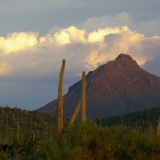
Texas and Arizona tours focus principally on birds and natural history. The New York/New England tour combines birding, ecology and numerous cultural and historical attractions of the area. Stay tuned for new trips!
2019-2020 Tours
Texas Rio Grande Valley Birding Tour
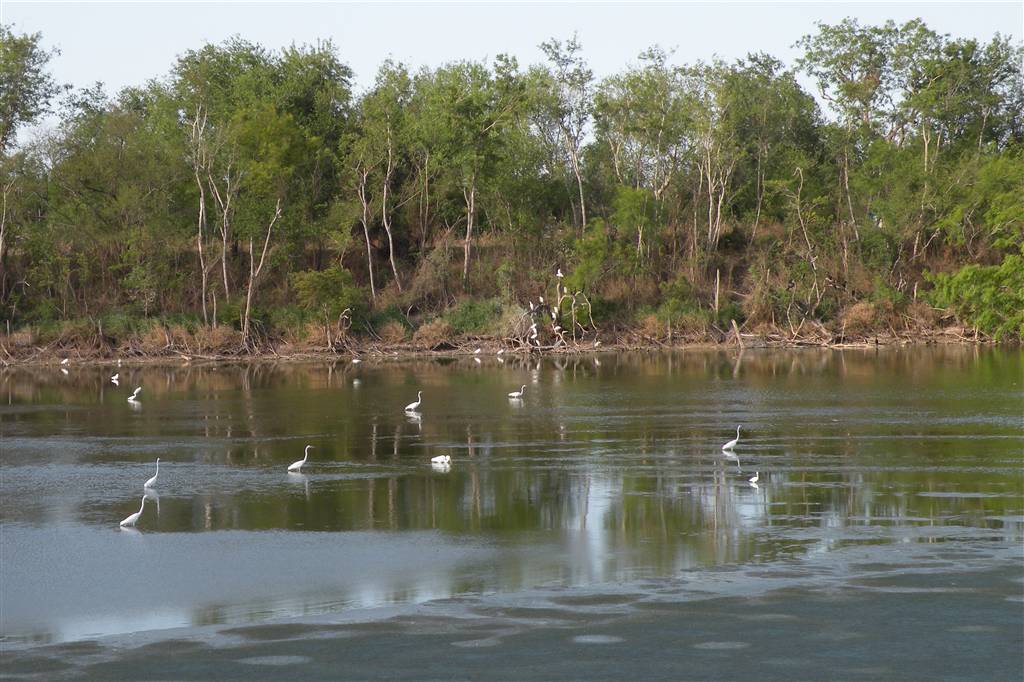
Edinburg Scenic Wetlands
The Rio Grande Valley of Texas, from Brownsville and the Gulf coast to Falcon Lake, is a paradise for birders and wildlife lovers, year-round. The semi-tropical valley is the home of many exotic birds, butterflies and flowers that give it a special place in American natural history. Much of the wildlife – birds such as the Great Kiskadee, Green Jay and Plain Chachalaca – can be found only along the Rio Grande. The little towns of Alamo, Harlingen and San Benito, all in the heart of the valley, will be our home for one week as we explore the area and observe the colorful wildlife.
Many exciting valley species fill the woodlands, shorelines and resacas (ox-bow lakes): Buff-bellied Hummingbirds, Harris’ Hawk, Reddish Egret, Tri-color Heron, Altamira Oriole, Greater Roadrunner, Neo-tropical Cormorant, Green and Ringed Kingfishers, Crested Caracara, Roseate Spoonbill, Couch’s Kingbird, White Ibis, Groove-billed Ani, Anhinga, Least Grebe, Golden-fronted Woodpecker, Red-crowned Parrots and Black-bellied Whistling Ducks. To give some idea of the diversity seen locally, one guide notes that the bird list at the Santa Ana NWR, a relatively small preserve, lists 43 warblers, 24 flycatchers, and 29 species of wildfowl!
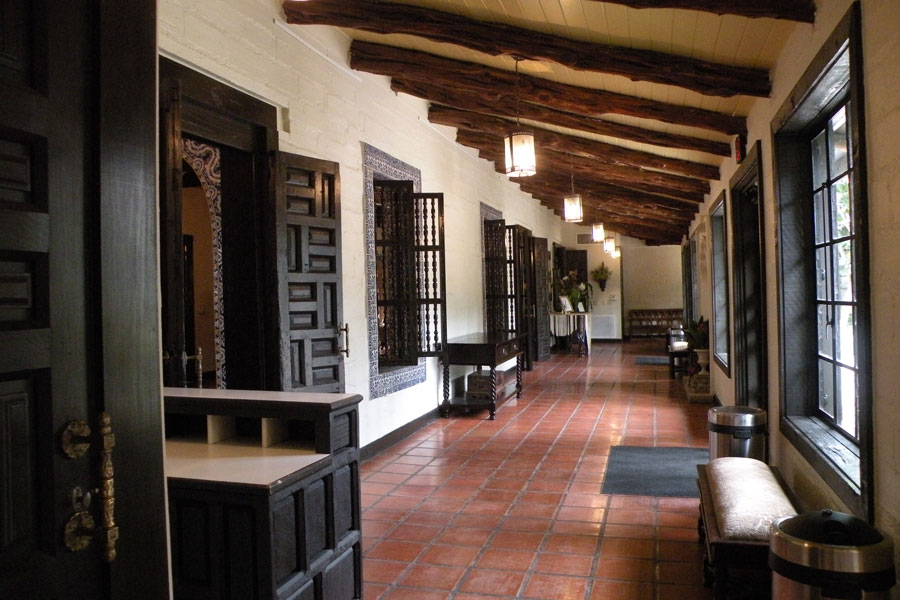
Additionally, rarities such as the Pauraque (a tropical nighthawk), Masked Duck, Clay-colored Robin and Tropical Parula are occasionally seen. Sabal Palm Audubon and other preserves provide bird-feeding stations that give good sightings of jays, chachalacas, titmice, sparrows, doves and woodpeckers. Equally exciting, butterflies like the Giant Swallowtail, Gulf Fritillary and Mexican Bluewing flit through the thickets and gardens, which are graced with Passionflower, Calico bush/Lantana, Heliotrope and other showy flowers.
Bird species seen on the tour usually exceed 100, with many exotics. Web sites such as the "LRGV World Birding Center" will give you more info about the birds and wildlife of the valley; see theworldbirdingcenter.com. From scores of hot spots we’ll pick some of the best: Edinburg Scenic Wetland, Quinta Mazatlan, Laguna Atascosa NWR, South Padre Island, Frontera and Sabal Palm Audubon, UT Brownsville, Estero Llano State Park, Santa Ana NWR and several others. Our daily schedule will generally include visits to two nature areas, a lunch break and late afternoon relaxation time.
Cost of the tour is $1275 per person, double occupancy. This includes ground transportation, all accommodations, guiding and park entrance fees, continental breakfasts and two dinners. The trip begins and ends in Harlingen, Texas, with pickup at the airport.
We will travel by van (limited to 8 people), and stay at two popular valley lodgings, the Alamo Inn and Vieh’s B&B. Our knowledgeable and friendly hosts, Keith Hackland and Charlie and Lana Vieh, will greatly enhance our stay with their expertise on local wildlife. See you deep in the heart of Texas!
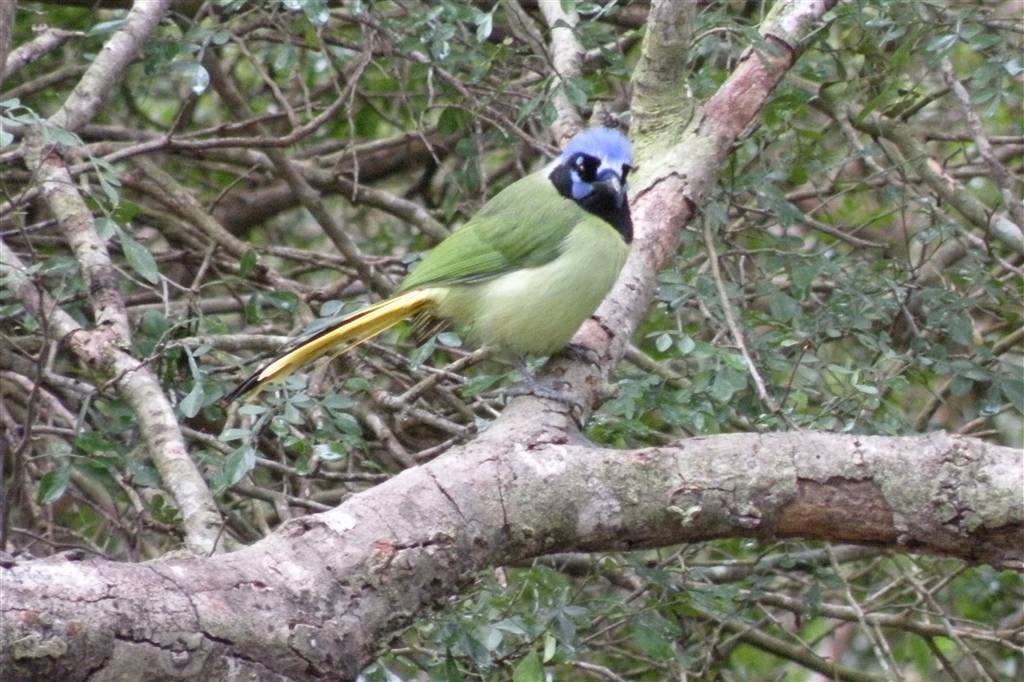
Green Jay, Sabal Palm Audubon
See the Texas picture gallery!
Southeast Arizona, the roughly rectangular area between Tucson, Mexico, and New Mexico, is generally considered one of the most exciting birding spots in the country; it also has a beautiful and unique landscape. There are many unusual and wonderful birds, reptiles and mammals, not to mention cactus-filled deserts, high peaks and cultural landmarks. The area is generally high desert bisected by several mountain ranges, such as the Chiricahuas, which have lush riparian woodlands, Spring is an excellent season for traveling to this area, both for the wonderful birding and the mild weather.
On this spring tour we will travel by van (limited to 7 people), stay in excellent lodgings, and visit many of the spots renowned for their birdlife, such as the Arizona Sonora Desert Museum, Mt. Lemon, Whitewater Wash NWR, Ramsey Candon, the Chiricahua Mountains, the San Pedro River, Portal, Cave Creek and the Sonoita Creek Preserve. The trip will begin and end in Tucson. We will spent two days in the Sonoran Desert near Tucson, another two in the Huachucas, and travel through Bisbee to the Chiricahua Mountains for the final three days at the SW Research Station. The cost of the tour includes all lodging (double occupancy), ground transportation, entrance and guide fees, breakfasts and two dinners. Lodging at the Southwest Research Station in the Chiricahuas is dormitory style, up to five persons per room, with a group bathroom. (An individual room at the SWRS is available).
Cost of the tour is $1,650 per person, double occupancy, and includes all ground transportation, guiding and park entrance fees, all breakfasts and two dinners. Birds that we can reasonably expect to see include such Southwest specialties as Roadrunners, Painted Redstarts, Phainopeplas, Vermillion flycatchers, Strickland's woodpeckers, Blue-throated hummingbirds (and up to 8 other kinds of hummers), Gray Hawks, Gila woodpeckers, Gambel's Quail, several kinds of tanagers, orioles, warblers and sparrows, White-winged doves, Curve-billed thrashers, Verdins, Yellow-eyed juncos, and many, many others. Total bird species seen on the trip should total between 70 and 100. Several species of owls are possible as well, as are the famous local Elegant Trogons.
Go the Arizona picture gallery!
New York, Hudson Valley, Berkshires and Connecticut Tour
New York and New England have contributed 400 years of history to the American experience. Some of the institutions, events and individuals include Paul Revere, the Revolutionary War, the Hudson River School of Art, the Pilgrims, Broadway and Tin Pan Alley, the Lower West Side, Greenwich Village, Zabars, Lincoln Center, Bunker Hill, Carnegie Hall, Yankee Stadium, Yale and Harvard. The Statue of Liberty was the first sight millions of immigrants saw as they sailed into the New York City Harbor to begin their lives in America.Less well known is the natural history of the area, which includes many beautiful features, including the Hudson River, Long Island Sound, Central Park, the Palisades, the Hudson Valley, New York Harbor, the Catskills and Berkshires Mountains. Despite its endless millions of people, the area has salt marshes, mountains, butterflies, wildflowers, many birds and magnificent hardwood woodlands. Forests abound with Beech, Oak, Hickory and Tulip Trees, Trout lilies, Dutchmen's Breeches, Indian Pipe, Sassafras, Black cherry, Day Lilies, Shadblow and many other flowers and trees. Birdlife is diverse, with Cardinals, Catbirds, Scarlet Tanagers, Baltimore Orioles, Eastern Kingbirds, Blue Jays, Chimney Swifts, Red-eyed Vireos, swallows, Black-capped Chickadees and six species of herons and egrets. We should see many species of warblers, such as the Black and White, Yellow-throated, Magnolia, Yellow-rump, Canada, Black-throated Green, Prairie, Yellow and the Redstart. Water and shore birds will include willets, yellowlegs, Laughing Gulls and Common Terns; Osprey, Great-crested Flycatchers, Eastern Phoebes, Carolina Wrens, Common Grackles and Red-breasted Grosbeaks are fairly common. We would typically see 70-80 species of birds during this time.
During this late Spring tour, I will show you some of the many natural and cultural attractions that the Tri-State area (New York, Connecticut, New Jersey) and Massachusetts. We will return down the Connecticut River Valley to Guilford and New Haven, cross Long Island Sound to visit the Roosevelt estate at Sagamore Hill, and return to Connecticut. You will have two afternoons and evenings on your won to visit your personal favorites. We will stay in three beautiful historic Inns or B&Bs: one in Rockland County, just outside NYC; the Revolutionary War-era Red Lion Inn of Stockbridge (in the Berkshires Mountains); and a third near New Haven, Connecticut. All are historic, gracious and beautiful accommodations. Each stay of three days will allow us to explore the natural and cultural history of the area.
The Tri-State area, especially the New York area and the Hudson Valley, was my home for 45 years, and I am very familiar with much of its natural and cultural history.
Some features of the tour: Central Park, Circle Line around Manhattan, the Hudson Valley, the Roosevelt estate (Hyde Park), Greenwich Village, the Guilford Green, Long Island Sound, the American Museum of Natural History, the Red Lion Inn, Fraunces Tavern, St. John's Cathedral, Emily Dickenson's and Hawthorne's homes, Zabar's Delicatessen, Yale University and the Peabody Museum, the Plaza, the Cloisters Medieval Museum and Lincoln Center. We will visit many beautiful natural areas, such as Central and Inwood Park, the Berkshires Mountains, Jamaica Bay, East Rock Park, Long Island Sound, Greenbrook Preserve and the Palisades. The tour includes all lodging (double occupancy), park and museum entrance fees, ground transportation and tour guide fees. All breakfasts are included, as are two dinners. The cost will be about $2000 per person.
More Excursions
Local Bay Area: Morning Birding Tours
Weeklong National Birding Tours